User Experience • Web Design • Development

TKCL Website Redesign

Transforming user confusion into clarity through comprehensive UX research, strategic information architecture, and conversion-focused design.

Role
UI & UX Designer
Timeline
4 months
Team Size
7 members
Tools
Figma, Analytics, Notion

Collaboration & Stakeholders

Working cross-functionally with designers, engineers, PMs, and stakeholders to build relationships and ensure comprehensive understanding of business goals.

Cross-Functional Team Structure

Led UX design efforts while fostering strong collaboration across all disciplines to ensure alignment with business objectives and technical feasibility.

Core Team Members

Marketing Lead: Provided user behavioral insights, conversion metrics, and business requirements

Web Developer: Co-developed technical specifications and ensured design feasibility

CEO/Stakeholder: Set strategic vision, approved design direction, and validated business impact

Collaboration Rituals

Weekly Design Reviews: Shared prototypes and gathered feedback on user experience

Stakeholder Sessions: Presented research findings and design rationale to leadership

Technical Syncing: Collaborated with developers on implementation approaches

Stakeholder Communication Strategy

Established clear communication channels and regular touchpoints to maintain alignment throughout the design process and ensure buy-in from all stakeholders.

Research Insights Sharing

Conducted comprehensive stakeholder interviews with the Marketing Lead to understand user behavior patterns, conversion challenges, and business priorities. Created digestible research summaries for non-design stakeholders.

Design Decision Documentation

Documented rationale behind major design decisions, including navigation restructuring, CTA optimization, and information architecture changes. This provided transparency and helped build stakeholder confidence in design choices.

Cross-Functional Workshops

Facilitated collaborative workshops to map user journeys, define business requirements, and align on success metrics. This ensured all team members understood project goals and maintaining consistency in execution.

Research & Discovery

Conducted comprehensive UX research including user interviews, analytics analysis, competitive benchmarking, and stakeholder workshops to uncover design opportunities.

The Challenge

TKCL's website suffered from fundamental UX issues that were hindering business growth. Despite having excellent technical capabilities, the website failed to communicate value effectively.

Key Problems Identified

  • Cluttered navigation and text overload confusing users
  • High bounce rates on service and blog pages)
  • Unclear service offerings confusing prospects
  • Weak lead generation flow with CTA confusion
Research Methods & Insights

Implemented multiple research methodologies to gather comprehensive insights about user behavior, business requirements, and competitive landscape.

Primary Research Methods

Stakeholder Interviews: Conducted detailed interviews with Marketing Lead to understand user behavioral patterns and conversion challenges
Analytics Deep Dive: Analyzed Google Analytics data to identify pain points, exit points, and user flow bottlenecks
Competitive Analysis: Performed systematic evaluation of direct competitors to identify design opportunities
User Journey Mapping: Created detailed journey maps based on analytics data and customer insights
Key Research Insights

Interviewed the Marketing Lead who revealed critical user behavior patterns from website analytics.

Key Findings

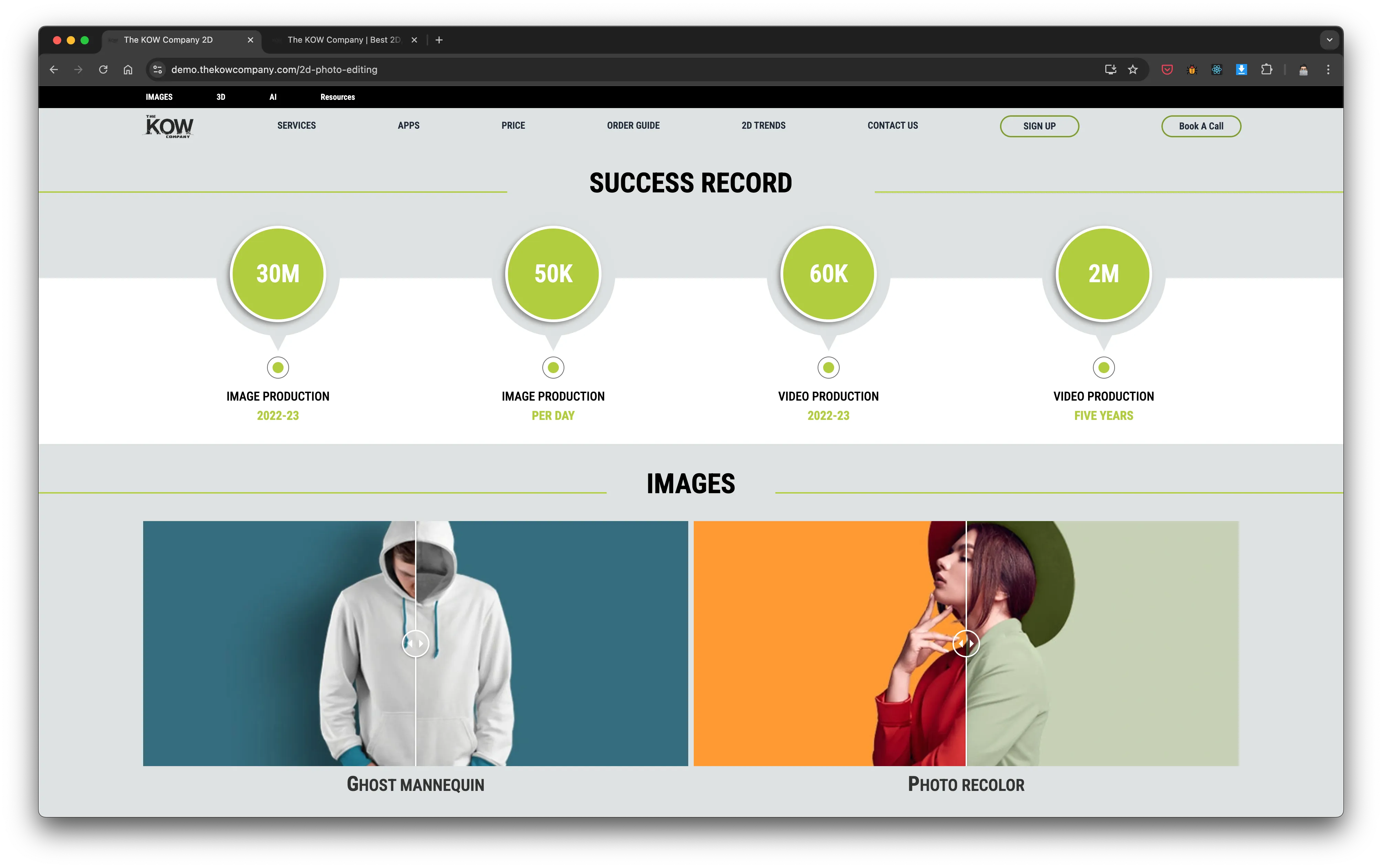
High bounce rates: 60% on 2D services, 40% on 3D services due to service confusion.

Decision paralysis: Multiple competing CTAs creating choice overload instead of guiding conversions.

Low engagement: Users barely interacting with image carousels and visual showcases.

Conversion dilution: Scattered CTA placement reducing potential despite high "Book a Call" interest.

Analytics Snapshot

Home page attracted visitors but service pages became exit points instead of conversion drivers.

Page Performance

Home page: High traffic, good entry point

Service pages: High exit rates, poor conversion

Contact page: Moderate traffic, users seeking alternatives

User Behavior

Low engagement: Minimal interaction with image carousels

High CTA interest: Strong "Book a Call" engagement

Confusion factor: Scattered CTA placement reducing clarity

Customer Insights

TKCL had technical capabilities but the website failed to communicate value effectively, creating user frustration.

Key Findings

Service confusion: Unclear offerings, competitor differentiation, and solution fit

Attraction factors: Easy contact access and AI-powered resources

Common objections: "Website feels messy" and "information overload"

Decision Factors

Primary concerns: Cost, quality, turnaround time, reliability

First questions: Pricing structure, turnaround times, file transfer methods

Communication gap: Website not addressing customer needs directly

Competitor Analysis

Competitors had strengths but shared common weaknesses that TKCL could exploit through better UX and messaging.

CompanyStrengthsWeaknesses
Pixelz
  • Visual hierarchy
  • Clear processes
  • Fast site performance
  • Lack of interactivity
  • Weak storytelling
  • Generic CTAs
Bright River
  • Professional design
  • Good portfolio showcase
  • Complex navigation
  • Limited service clarity
BZM Graphics
  • Strong visual identity
  • Good loading speed
  • Outdated design
  • Poor mobile experience

Strategic Opportunity

While competitors focused on technical capabilities, they neglected UX and storytelling. TKCL could differentiate through clear, engaging user journeys that address specific customer needs and concerns.

Ideation & Brainstorming

Participated in brainstorming sessions, facilitated workshops, and explored diverse solutions to address user confusion and conversion challenges.

Solution Exploration Process

Conducted multiple ideation workshops to explore various approaches for solving user confusion and improving conversion rates. Applied divergent thinking to generate creative solutions before converging on optimal approaches.

Ideation Activities

Service Restructuring Workshop: Mapped current services against user needs, identifying opportunities for clearer categorization and messaging
CTA Optimization Brainstorming: Explored multiple CTA strategies, from single-focus to contextual approaches, testing against conversion psychology
Navigation Simplification: Collaborated on reducing cognitive load through information architecture redesign and progressive disclosure

Early Solution Concepts

Three-Tier Service Framework: Developed "Image Editing, 3D Visualization, AI Tools" structure to reduce complexity and improve comprehension

Progressive Disclosure Strategy: Designed layered information approach where core value is immediate, with detailed processes revealed incrementally

Social Proof Integration: Strategically positioned testimonials and portfolio work to build credibility throughout user journey

Trade-offs and Decisions

Complexity vs. Clarity: Balanced comprehensive service coverage with digestible information presentation

Choice vs. Guidance: Moved from multiple CTAs to focused "Let's Talk" primary action with contextual secondary options

Show vs. Tell: Prioritized visual portfolio integration over text-heavy descriptions to demonstrate capabilities

User Flows & Information Architecture

Created journey maps, user flows, site maps, and process diagrams to reduce user friction and guide visitors toward conversion.

Information Architecture Redesign

Restructured the entire information architecture to create clear user journeys and eliminate confusion. Each page now serves a specific purpose in guiding visitors toward conversion while reducing cognitive load.

Home

Clear CTA ("Let's Talk"), immediate lead collection

Key Elements: Hero section with value proposition, Service overview, Trust indicators

Services

Organized into Image Editing, 3D, and AI – structured and simplified

Key Elements: Clear categorization, Process explanation, Pricing transparency

Portfolio/Work

Showcase best projects, avoid clutter

Key Elements: Curated project selection, Case studies, Client testimonials

Support/Contact

Easy access for inquiries and resources

Key Elements: Multiple contact methods, FAQ section, Resource downloads
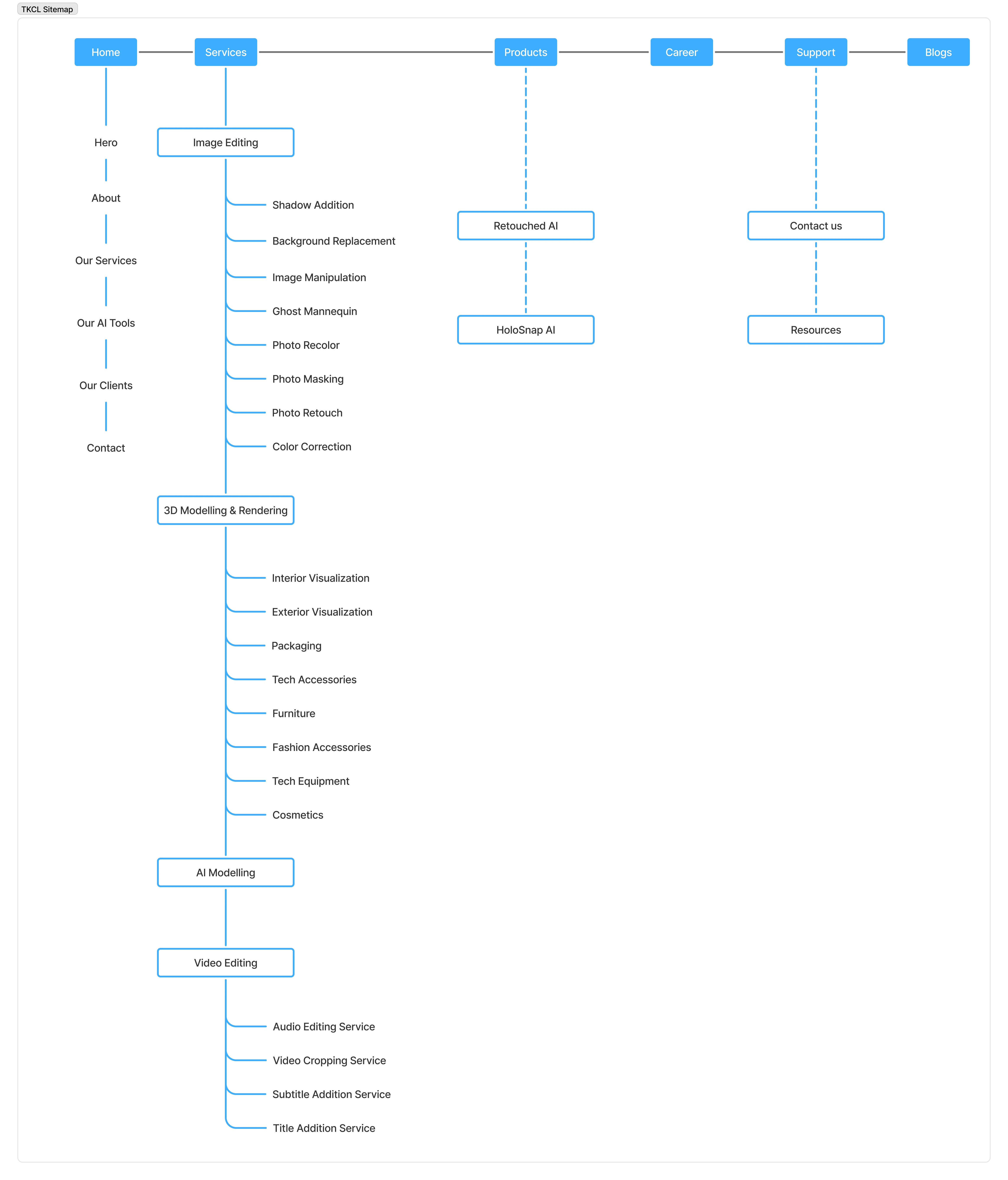
Site Structure & User Journey Map

Comprehensive sitemap showing the restructured information architecture designed to improve user navigation and reduce cognitive load through logical content organization.

TKCL Website Sitemap - Information Architecture

User Journey Optimization

Entry Points: Homepage designed as primary landing with clear value proposition and navigation paths

Discovery Flow: Service pages structured for progressive information disclosure and contextual CTAs

Conversion Paths: Multiple pathways to contact optimized for different user types and urgency levels

Trust Building: Strategic placement of testimonials, portfolio, and social proof throughout journey

User Flow Analysis & Friction Reduction

Mapped user flows to identify and eliminate friction points in the conversion journey, ensuring smooth progression from awareness to action.

Flow Analysis Insights

Decision Paralysis Removal: Reduced CTA options from scattered placement to strategic "Let's Talk" focus with contextual alternatives

Information Hierarchy: Restructured content to follow scanning patterns with scannable headers, bullet points, and visual breaks

Trust Signal Integration: Positioned social proof elements at key decision points to overcome skepticism

Mobile Optimization: Ensured touch-friendly interactions and compressed content hierarchy for smaller screens

Wireframes & Prototypes

Created wireframes, prototypes, hi-fi mocks, and interaction models progressing from low-fi sketches to interactive prototypes demonstrating user experience improvements.

Design Process & Tools

Developed comprehensive design deliverables using systematic approach from initial sketches to production-ready prototypes, ensuring all design decisions aligned with user research insights.

Design Deliverables Created

Information architecture redesign
Service categorization and messaging strategy
Conversion-focused wireframes and prototypes
Visual design system and brand guidelines
A/B testing framework and implementation

Tools & Process

Figma: Primary design tool for wireframes, mockups, and interactive prototypes
Low-fi Wireframes: Rapid sketching and layout exploration focusing on information hierarchy
Interactive Prototypes: Clickable prototypes for stakeholder validation and user testing
Component Libraries: Maintained design system consistency across all deliverables

Design Systems & Visual Design

Documented and maintained design systems, visual guidelines, typography, icons, and style guides ensuring consistency and accessibility across all design implementations.

Visual Design System

Established comprehensive design system components and visual guidelines to ensure consistency, accessibility, and maintainability across the entire website redesign.

Design Components Created

Typography System: Consistent font hierarchy, sizing, and spacing scales
Color Palette: Brand-consistent colors with accessibility compliance
Component Library: Reusable UI elements and interaction patterns
Layout Grid: Responsive grid system for consistent spacing

Key Features Implemented

Clear service categorization (Image Editing, 3D, AI)
Streamlined navigation with focused CTAs
Trust-building elements (testimonials, portfolio showcase)
Mobile-responsive design with fast loading
Lead generation optimization with clear next steps
Accessibility Checks & Compliance

Ensured comprehensive accessibility compliance through systematic checks, contrast validation, and keyboard navigation optimization meeting WCAG 2.2 AA standards.

Accessibility Implementation

Contrast Compliance: All color combinations tested for WCAG 2.2 AA standards (4.5:1 minimum ratio)
Keyboard Navigation: Full site navigation accessible via keyboard with visible focus indicators
ARIA Implementation: Proper semantic markup and ARIA labels for screen readers
Alt Text Standards: Descriptive alt text for all images and meaningful text for icons

Design System Contribution

Component Documentation: Created reusable component library with usage guidelines and variations
Design Tokens: Established consistent spacing, typography, and color scales
Responsive Patterns: Standardized layouts for mobile, tablet, and desktop breakpoints
Interaction Guidelines: Defined consistent hover states, transitions, and feedback patterns

Visual Transformations

Key design improvements showing before and after states of critical pages and sections.

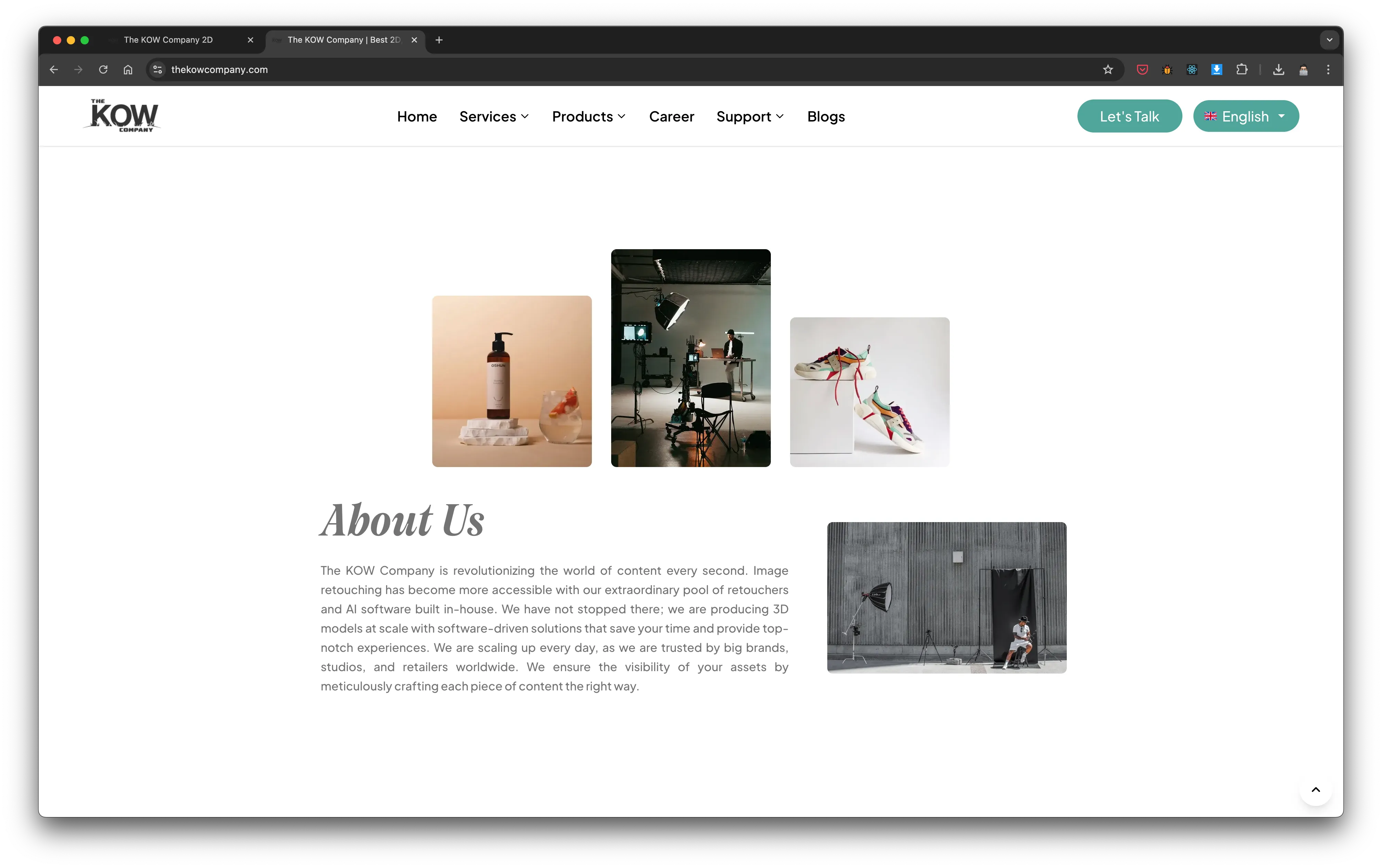
Hero Section Transformation

Before

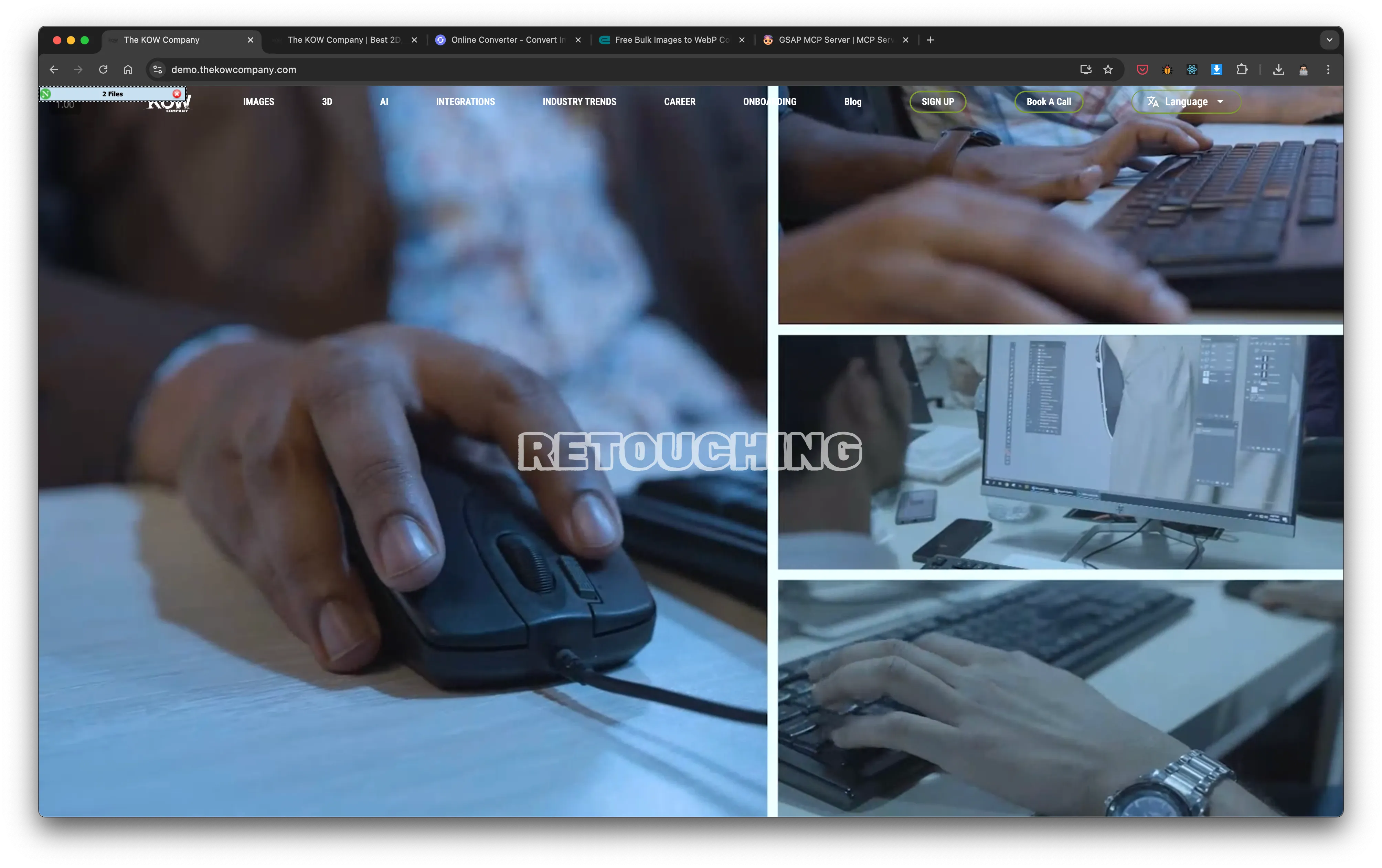
TKCL Hero Section - Before

After

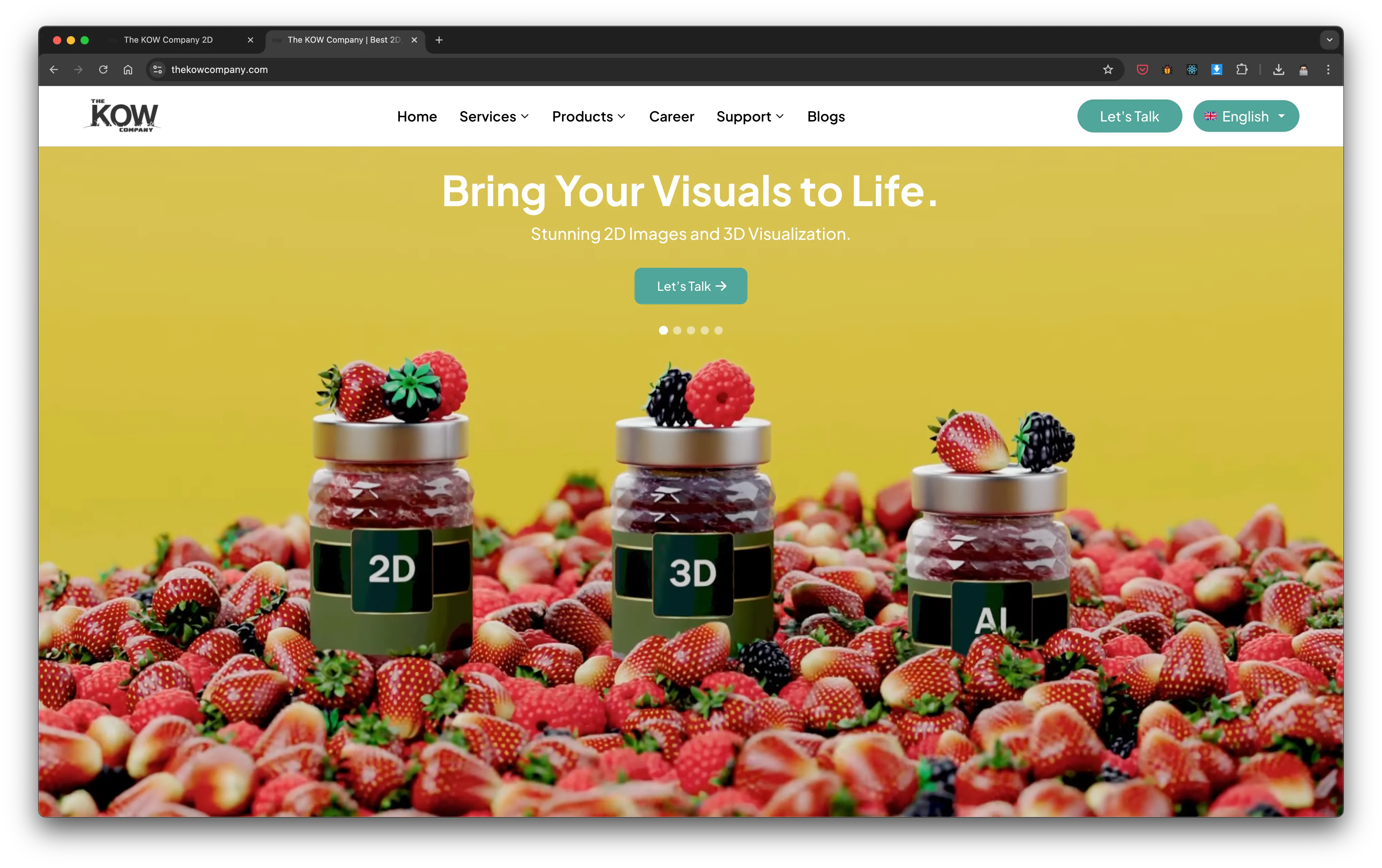
TKCL Hero Section - After

Applied cognitive load theory with clear value proposition and simplified CTAs.

Services Section Redesign

Before

TKCL Services Section - Before

After

TKCL Services Section - After

Restructured using Miller's Rule with card-based layout and progressive disclosure.

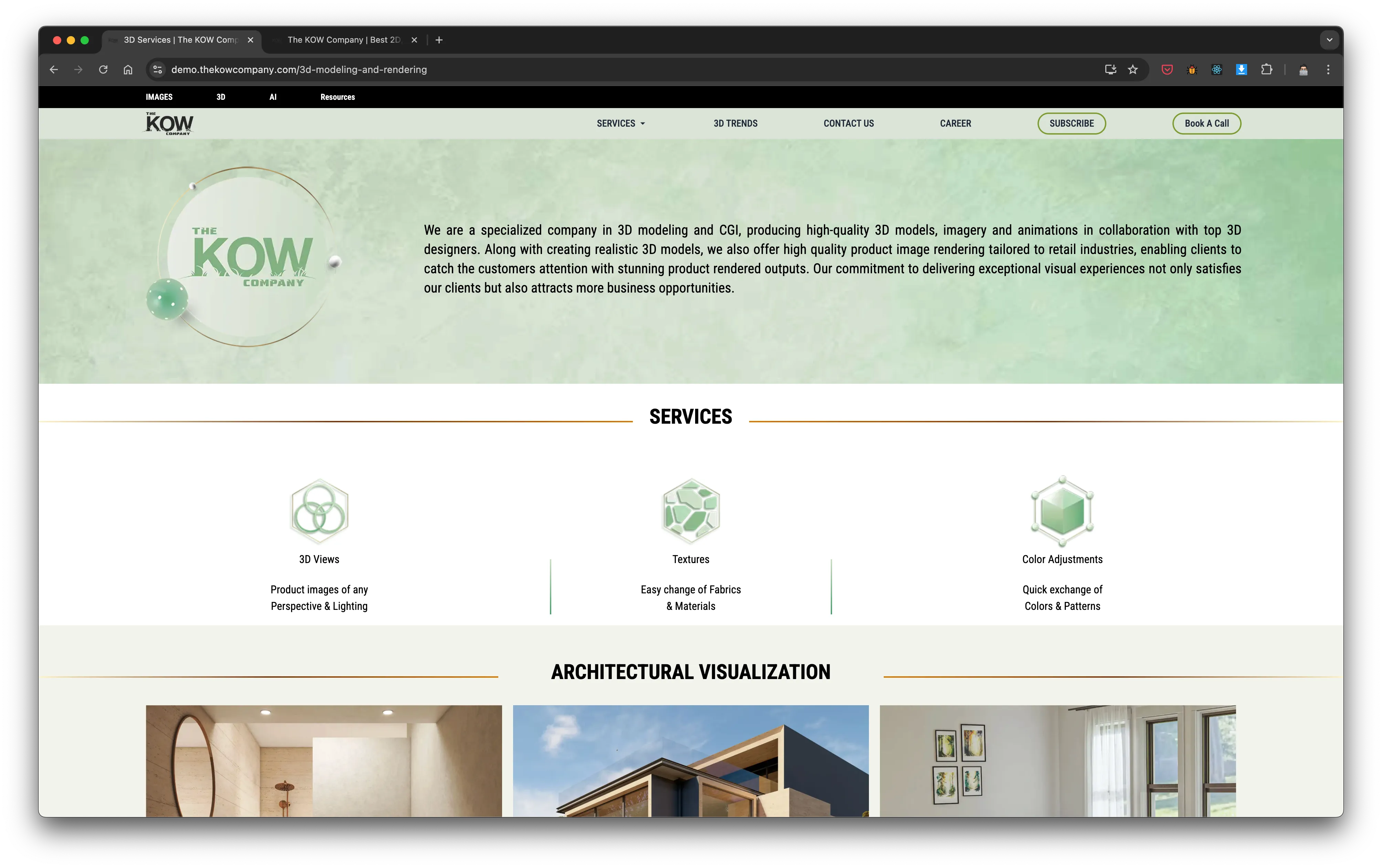
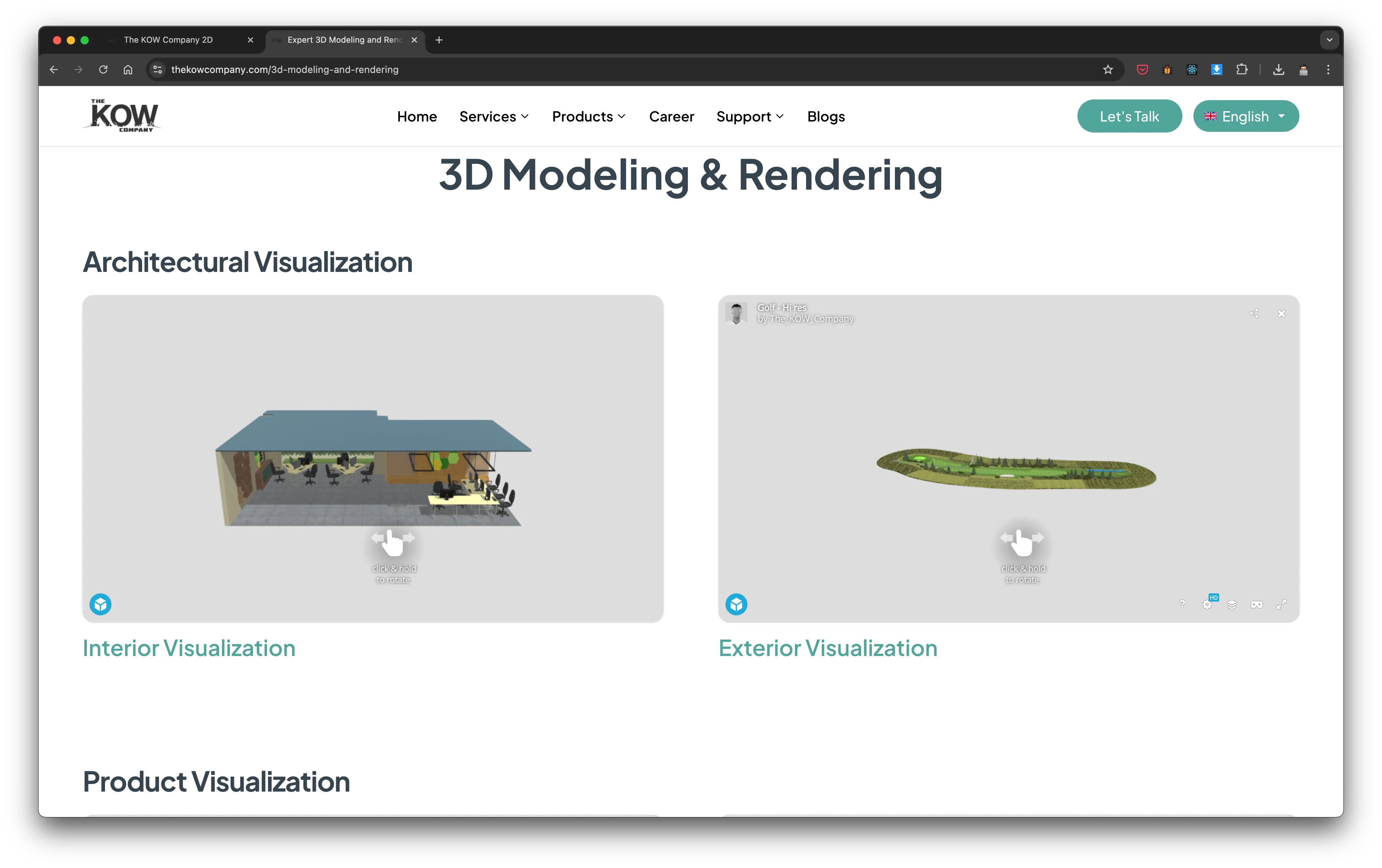
3D Services Page Transformation

Before

TKCL 3D Services - Before

After

TKCL 3D Services - After

Redesigned using "benefits over features" principle and decision-making psychology with "jobs-to-be-done" framework.

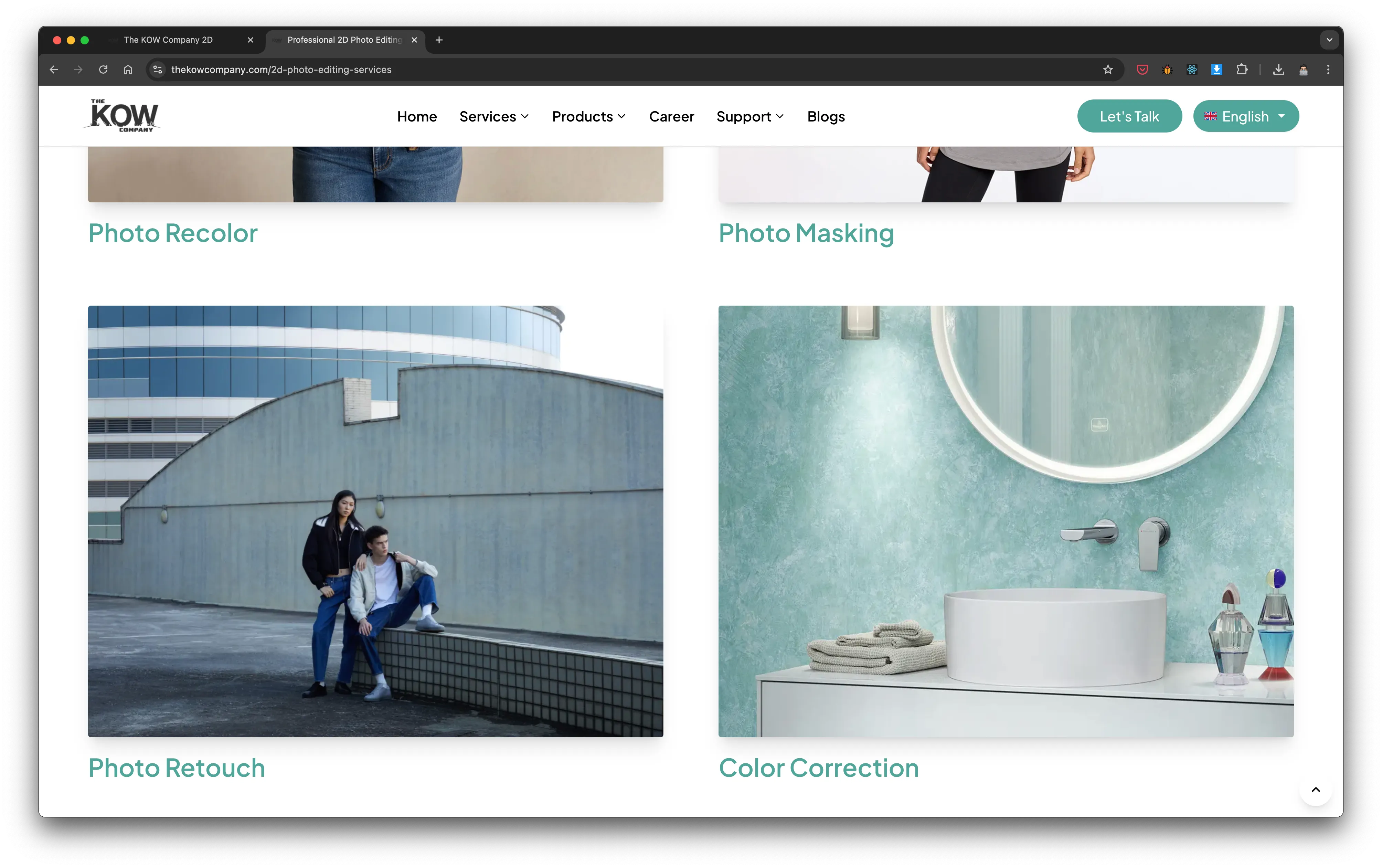
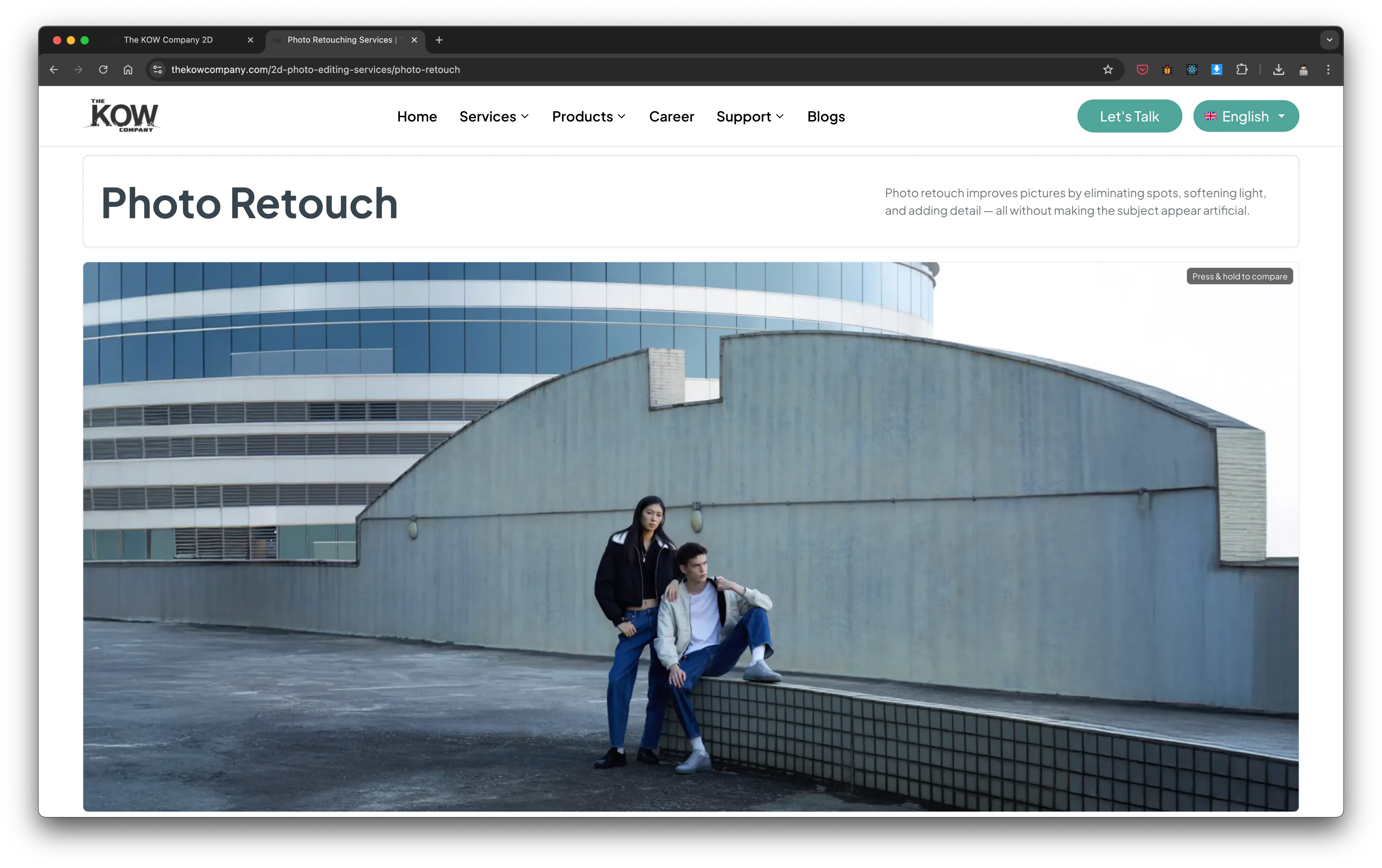
Image Editing Section Redesign

Before

TKCL Image Editing - Before

After

TKCL Image Editing - After

Restructured using scannable design and pricing transparency psychology with AI integration leveraging "novelty bias".

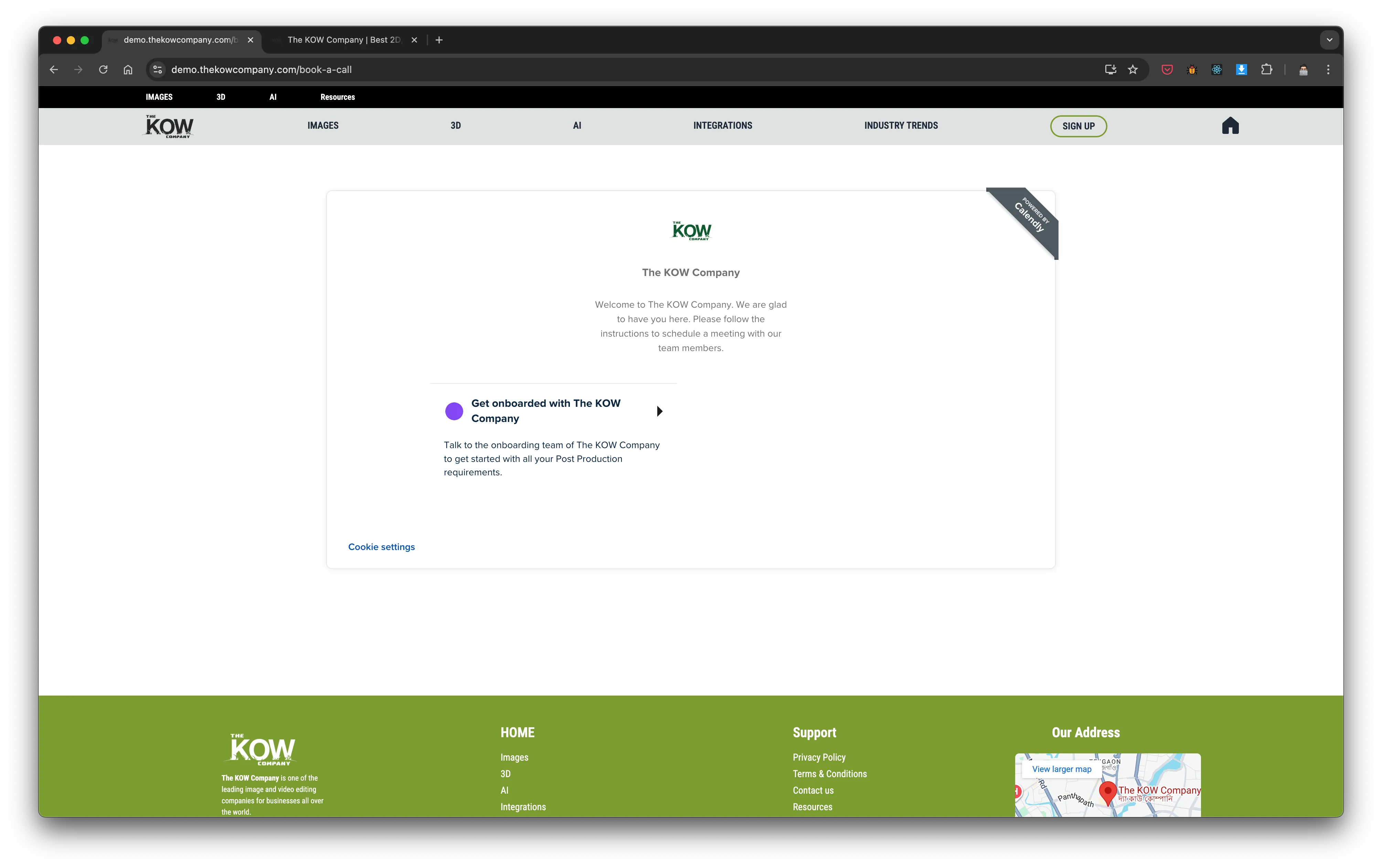
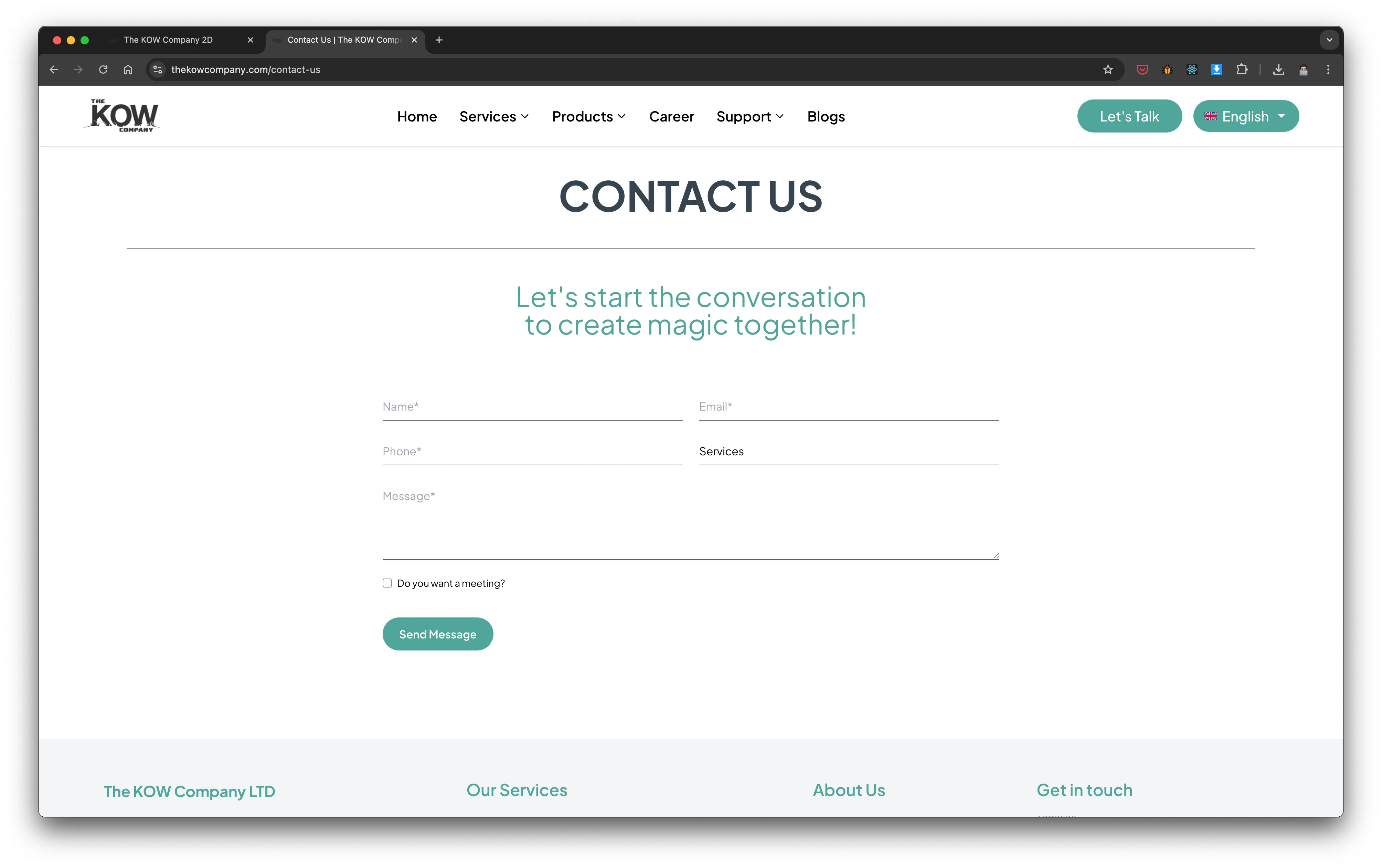
Contact Page Enhancement

Before

TKCL Contact Page - Before

After

TKCL Contact Page - After

Enhanced accessibility with multiple contact methods and streamlined user flow using "principle of least resistance".

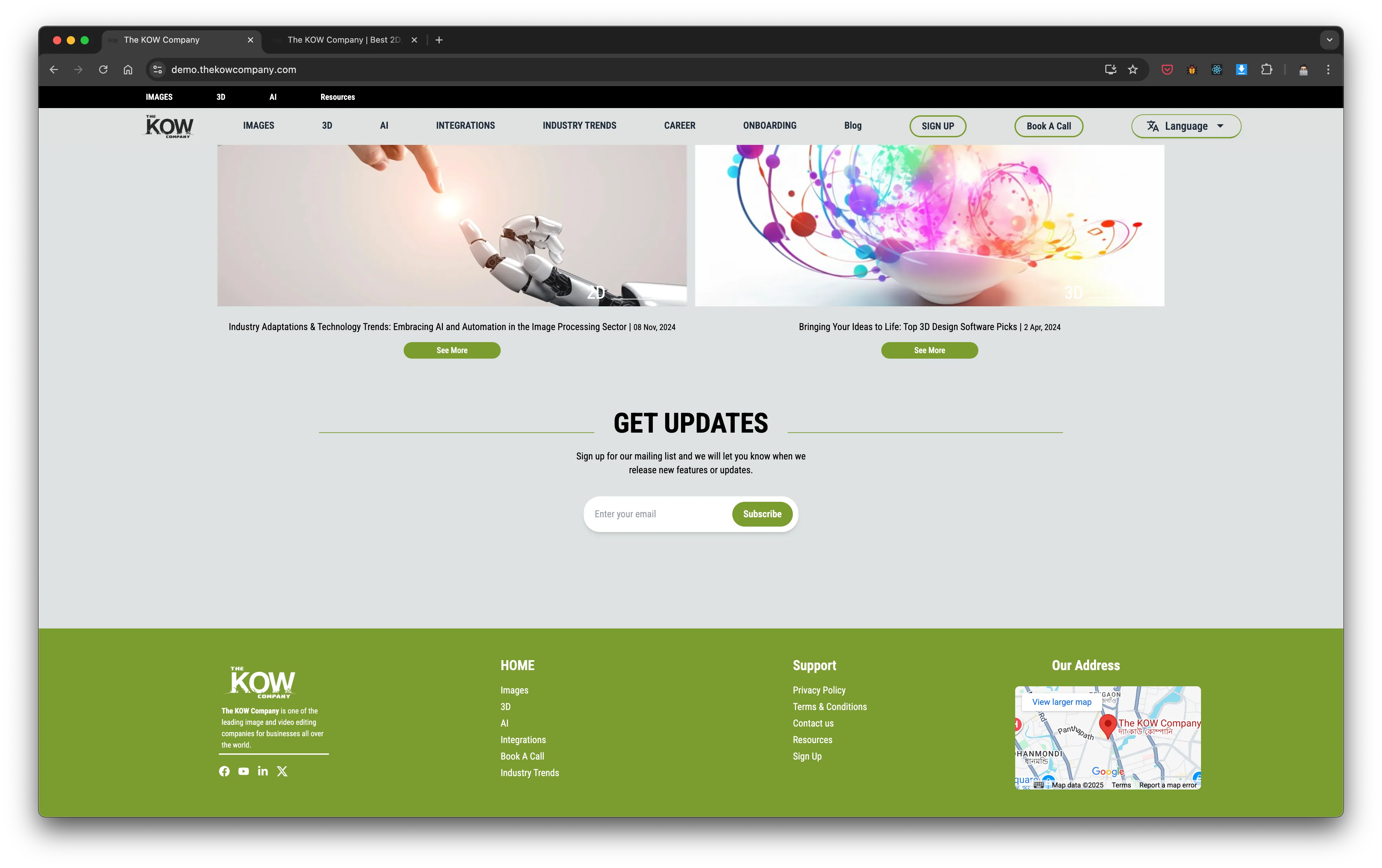
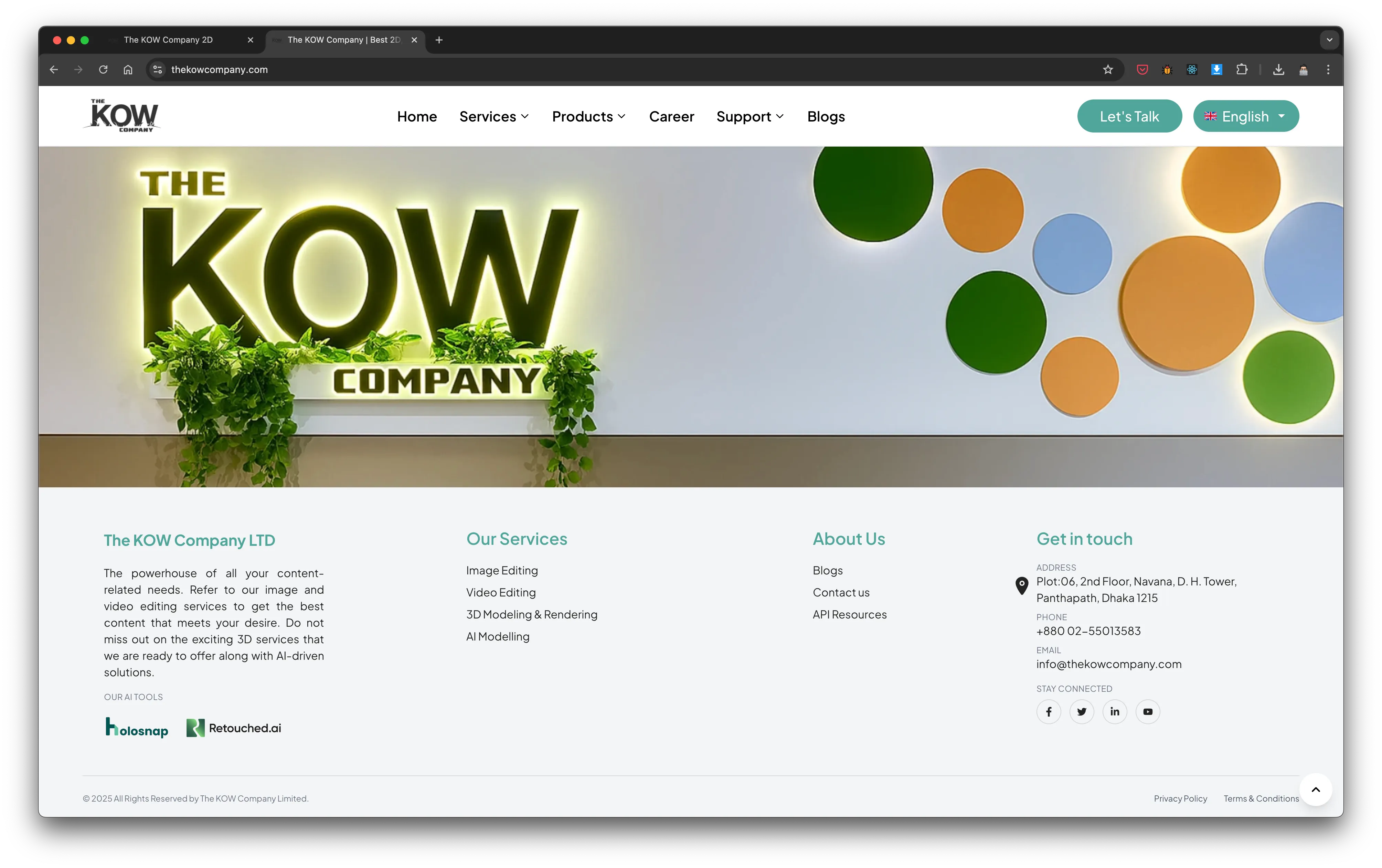
Footer Navigation Redesign

Before

TKCL Footer - Before

After

TKCL Footer - After

Redesigned using progressive disclosure and completion psychology with strategic CTA placement leveraging "completion bias".

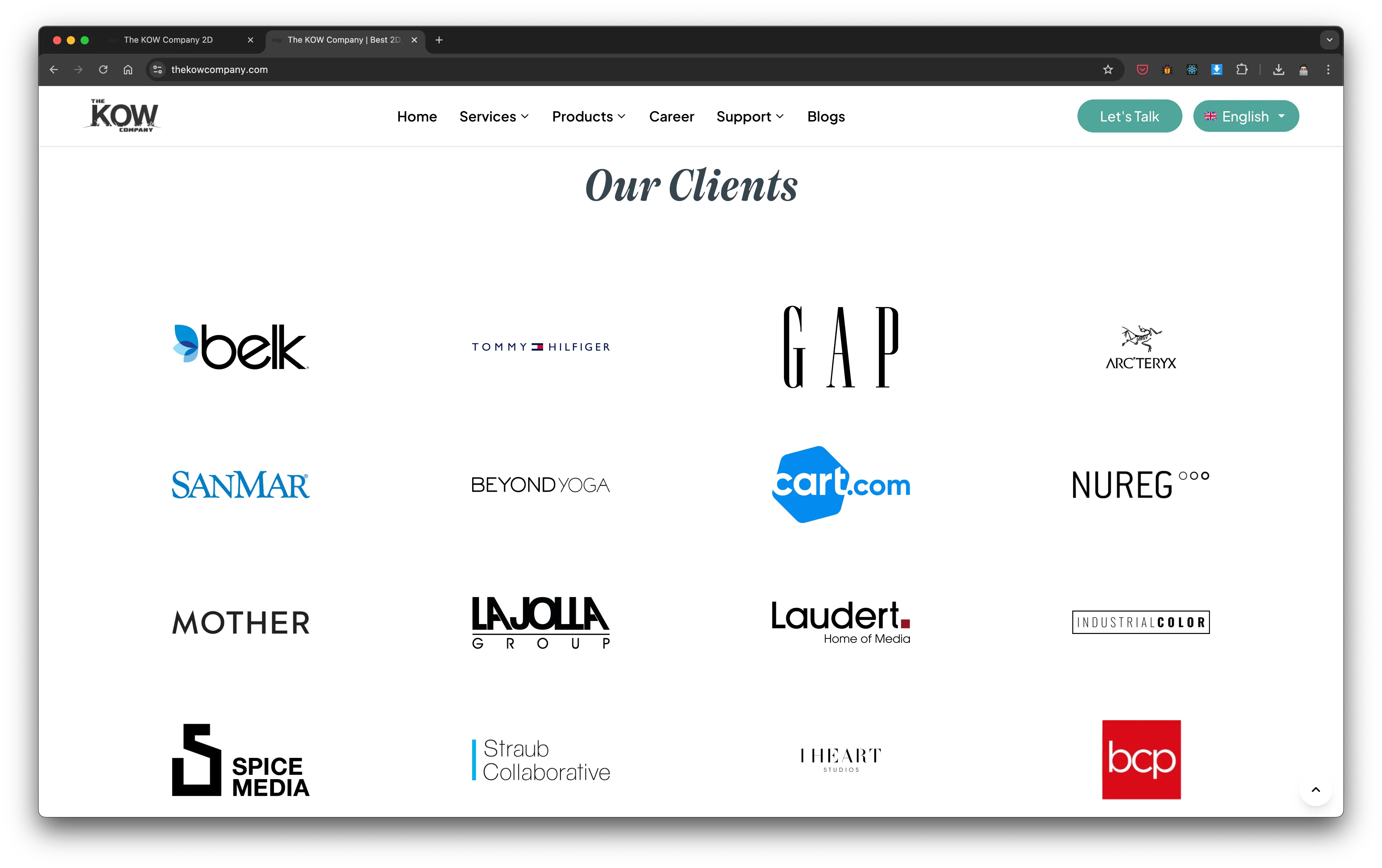
Additional Pages & Features

Demonstrates trust-building psychology and comprehensive information architecture with testimonials and detailed service pages.

TKCL Testimonials Page - After
Testimonials Section

Strategic social proof placement with authentic client stories, visual hierarchy, and integrated CTAs to capitalize on trust-building moments.

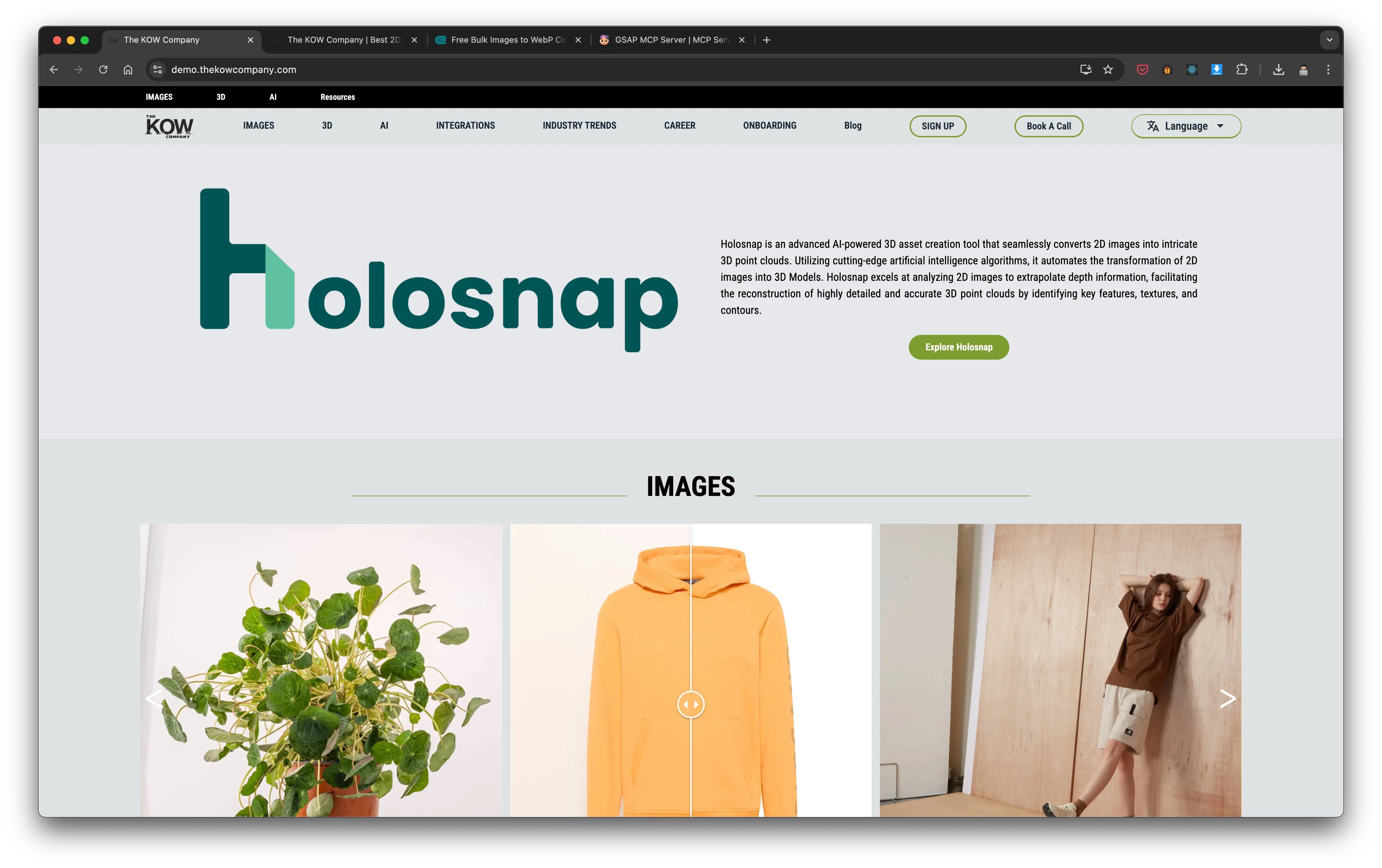
TKCL Nested Image Editing - After
Nested Image Editing Section

Comprehensive service breakdown with progressive information disclosure, visual examples, and transparent pricing structures for informed decision-making.

Documentation & Specs

Documented design decisions and maintained specifications throughout development, ensuring clear handoff materials and rationale logs for future reference.

Design Specifications & Handoff Process

Created comprehensive design specifications and handoff documentation to ensure smooth development collaboration and maintain design consistency throughout implementation.

Specification Deliverables

Annotated Wireframes: Detailed page layouts with spacing, alignment, and interaction notes
Design Redlines: Precise specifications for styling, typography, and component behaviors
Asset Organization: Structured file organization with naming conventions and export guidelines
Responsive Breakpoints: Detailed specifications for mobile, tablet, and desktop layouts

Handoff Process

Developer Collaboration: Regular sync sessions to clarify implementation details and answer questions
Design System Documentation: Component usage guidelines and pattern documentation for consistency
Quality Assurance: Design review process to ensure implementation matches design specifications
Iterative Feedback: Continuous improvement through development phase reviews and adjustments

Rationale Documentation

Design Decision Log: Documented reasoning behind major design choices and user experience decisions
User Research Integration: Clear links between research findings and their implementation in design solutions
Trade-off Analysis: Documented consideration of alternative approaches and rationale for chosen solutions
Performance Considerations: Design decisions made with technical constraints and performance optimization in mind

Implementation & Collaboration with Engineers

Worked closely with engineering teams to ensure design documentation feasibility, technical implementation optimization, and seamless stakeholder handoff processes.

Engineering Collaboration Process

Maintained strong collaboration with the development team throughout implementation phase, ensuring design vision translates effectively into functional code while preserving user experience integrity.

Design-Development Syncing

Technical Feasibility Reviews: Collaborated during early design phases to ensure technical viability and performance optimization
Implementation Guidelines: Provided detailed specifications for responsive layouts, animations, and interactive behaviors
Cross-Functional Communication: Regular sync sessions to clarify design intent and resolve implementation questions
Performance Considerations: Designed with technical constraints in mind, balancing user experience with loading performance

Stakeholder Management

Scope Alignment: Worked with project leads to balance design vision with realistic implementation timelines
Quality Assurance: Participated in design review processes to ensure implementation fidelity
Iterative Feedback: Enabled rapid iteration and adjustment based on stakeholder input and technical constraints
Success Metrics: Aligned design decisions with measurable business outcomes and technical performance goals

Testing & Feedback

Supported user research and usability testing, analyzed feature performance, conducted competitive A/B testing, and implemented iterations based on feedback.

Competitive A/B Testing Analysis

Comprehensive A/B testing analysis comparing TKCL against Pixelz, Bright River, and bZm Graphics to validate design decisions and understand competitive position.

Test Methodology

Four-variant test: Equal traffic allocation (25% each) over four weeks

Key metrics: Bounce rate, session duration, pages per session, CTA click-through, lead conversion

Modeling approach: UX heuristics and behavioral patterns from similar e-commerce service sites

MetricTKCLPixelzBright RiverbZm Graphics
Bounce Rate36%42%39%40%
Session Duration2.7 min2.1 min2.3 min2.0 min
Lead Conversion4.3%3.0%3.5%3.8%

Key Competitive Insights

Navigation Advantage: TKCL's simplified navigation outperformed competitors' complex multi-level menus, reducing cognitive load and improving user flow.

AI Differentiation: TKCL's dedicated AI tools (Retouched.ai and Holosnap) created unique value proposition with concrete, accessible tools competitors couldn't match.

CTA Strategy: Focused two-CTA approach ("Let's Talk" and "Retouched.ai") outperformed competitors' scattered multiple CTAs, creating clearer conversion paths and reducing decision paralysis.

Performance Optimization Results

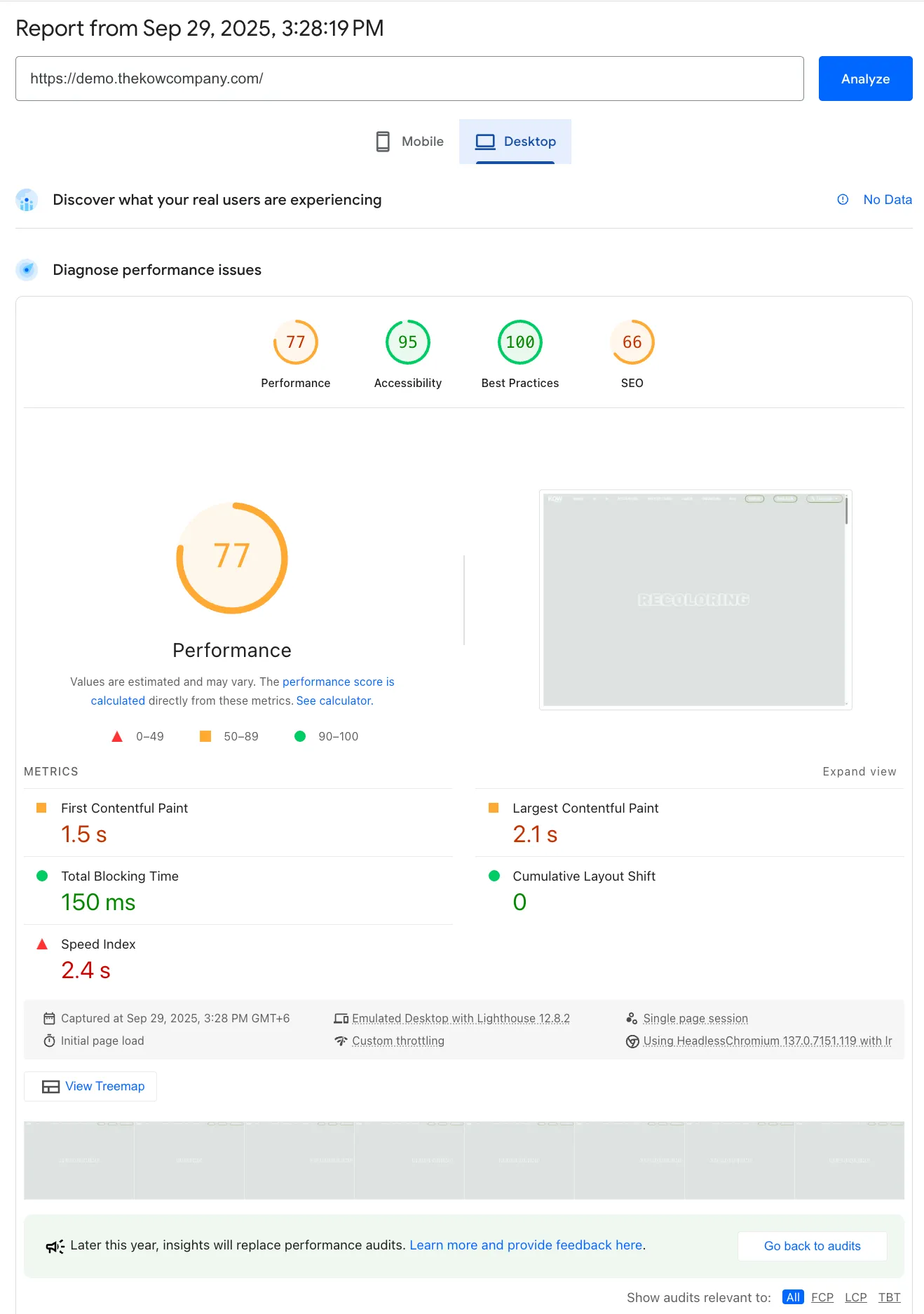
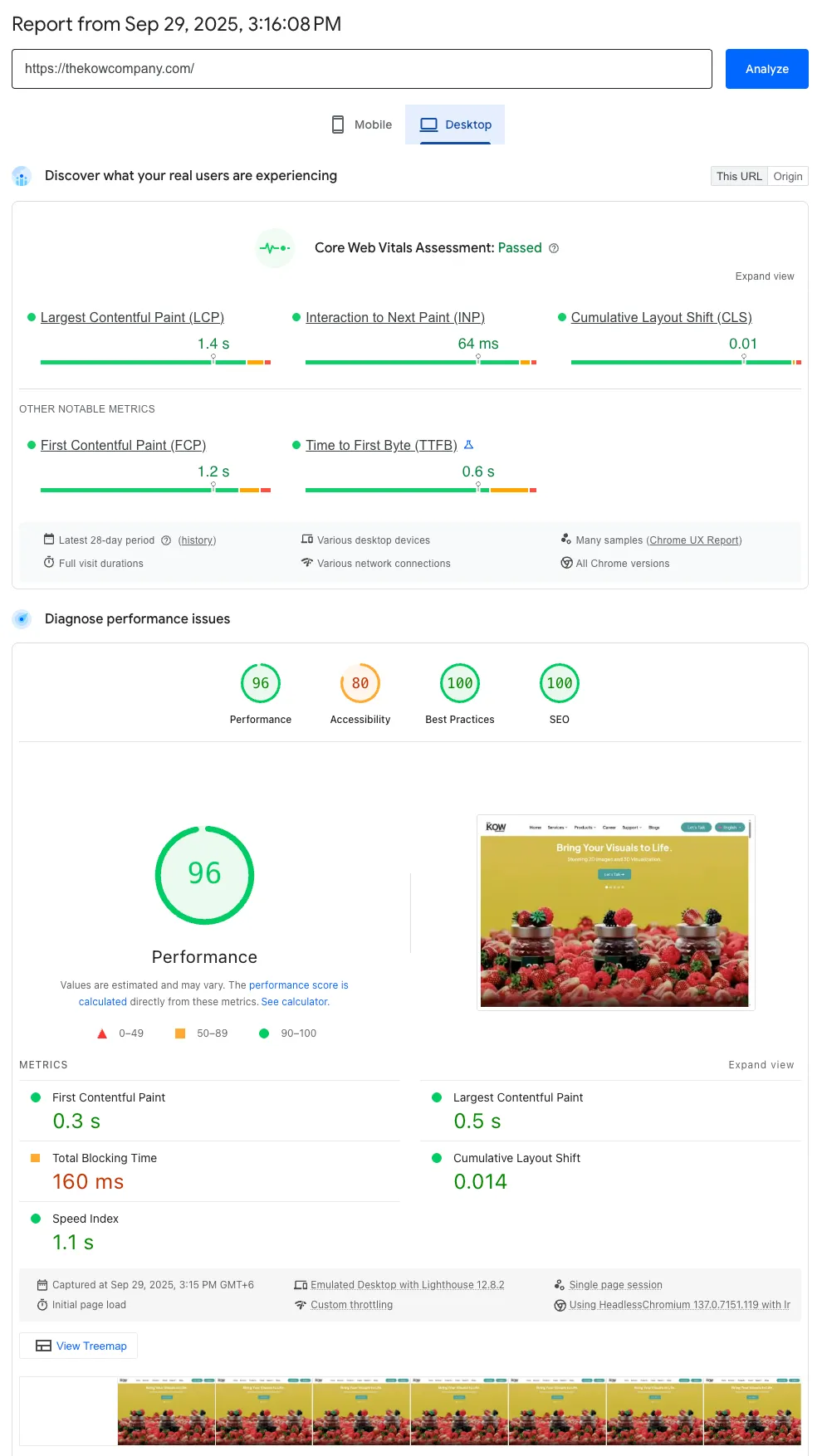
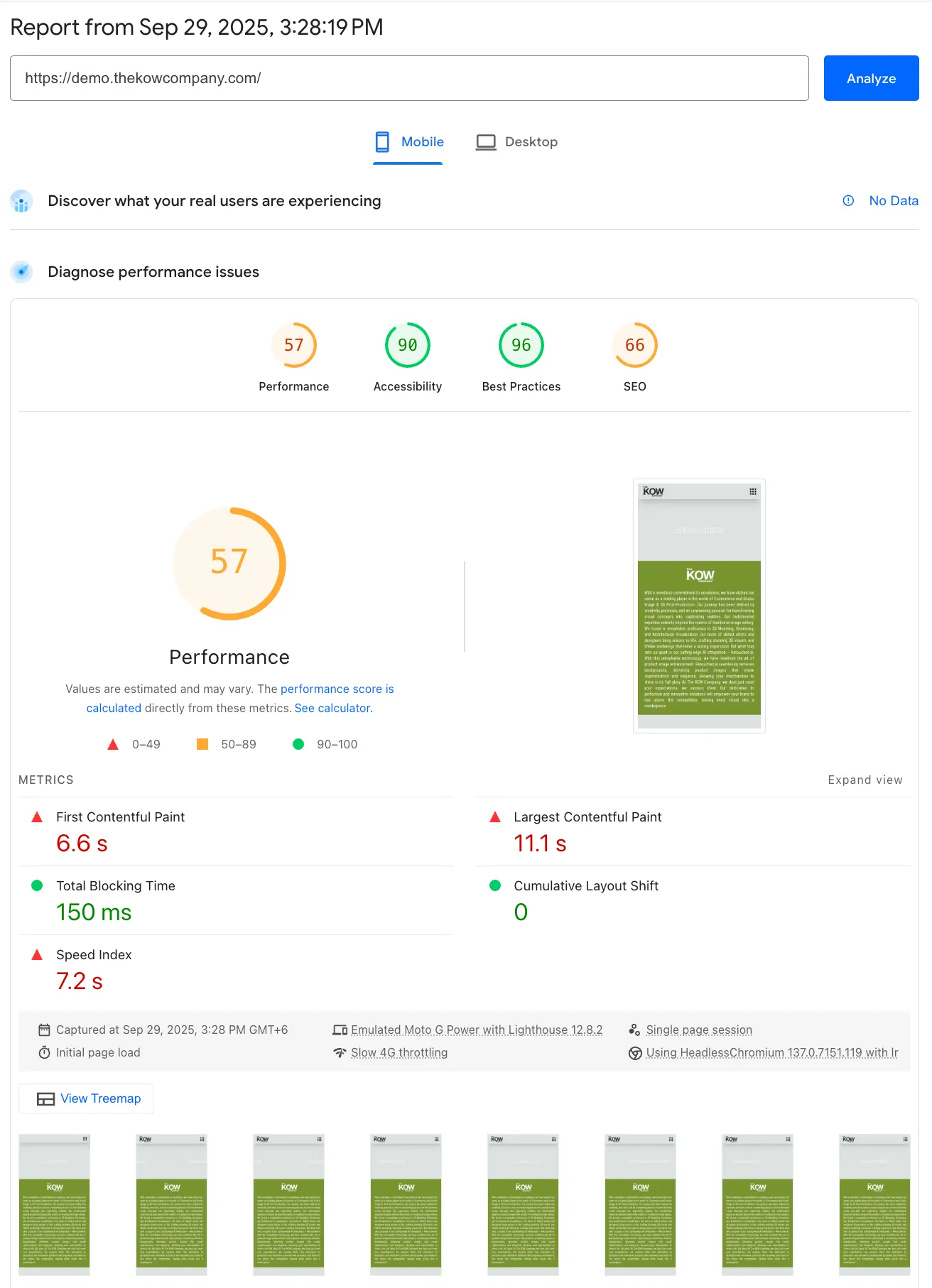
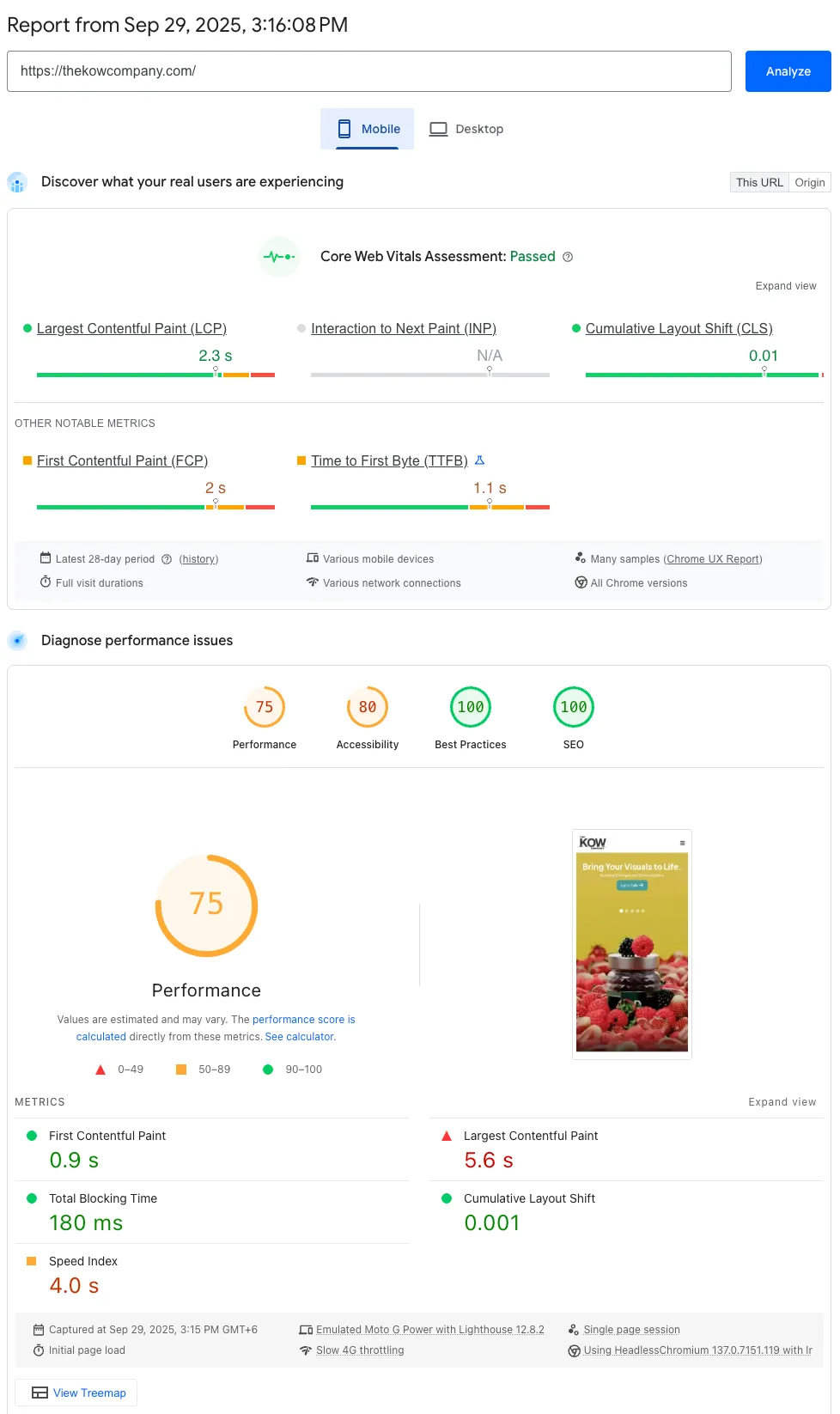
Comprehensive PageSpeed optimization showing significant improvements in Core Web Vitals and overall performance scores across desktop and mobile platforms.

Google PageSpeed Desktop - Before
Google PageSpeed Desktop - After

Desktop Performance - Before

Performance Score:77
First Contentful Paint:1.5s
Largest Contentful Paint:2.1s
Speed Index:2.4s
SEO Score:66

Desktop Performance - After

Performance Score:96
First Contentful Paint:0.3s
Largest Contentful Paint:0.5s
Speed Index:1.1s
SEO Score:100
Google PageSpeed Mobile - Before
Google PageSpeed Mobile - After

Mobile Performance - Before

Performance Score:57
First Contentful Paint:6.6s
Largest Contentful Paint:11.1s
Speed Index:7.2s
SEO Score:66

Mobile Performance - After

Performance Score:75
First Contentful Paint:0.9s
Largest Contentful Paint:5.6s
Speed Index:4.0s
SEO Score:100

Ready to Work Together?

Let's discuss how I can help transform your digital presence and drive meaningful results.